
The role of localization in on boarding Non-Crypto Natives
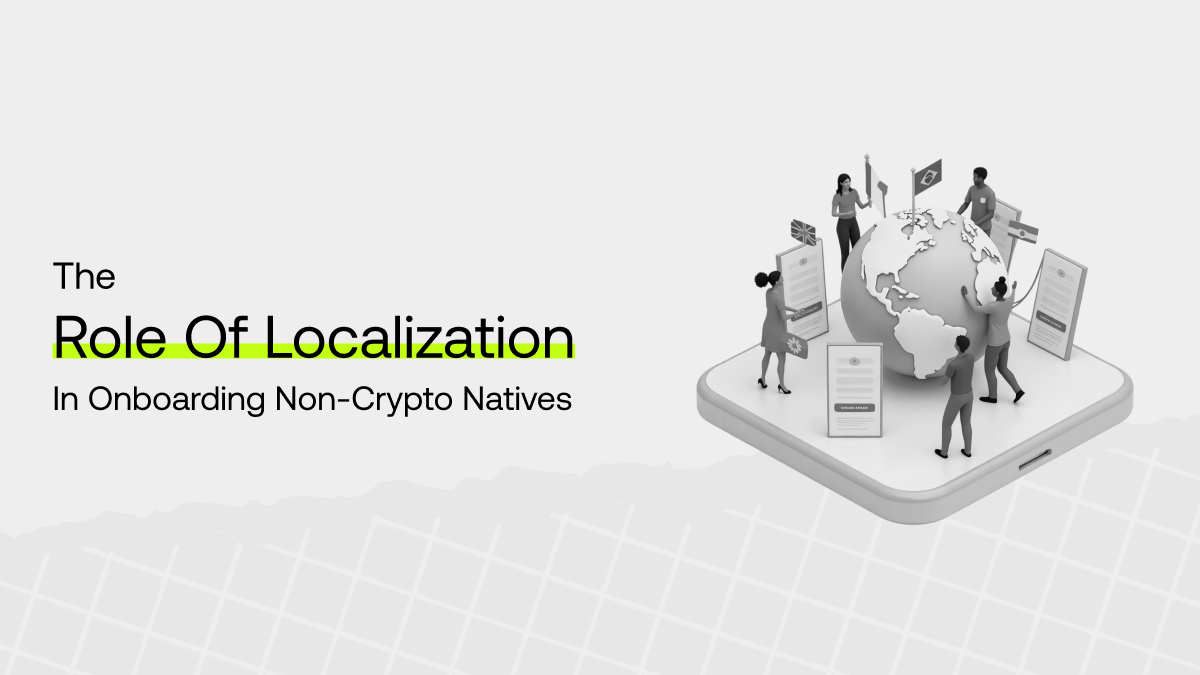


Cryptocurrency and blockchain technologies are powerful global forces for change, offering unprecedented financial inclusion and digital ownership. Yet, despite this potential, billions of people, often called non-crypto natives remain excluded due to overwhelming technical and cultural barriers. Onboarding these users is the industry’s most critical challenge. It’s not merely a technological problem but a human one, requiring a deep focus on accessibility, trust, and a generic approach fails; success demands a hyper-focused growth strategy built on comprehensive localization. This is the cornerstone of achieving true global crypto adoption.
Why Onboarding Non-Crypto Natives is Difficult
The initial encounter with Web3 is often overwhelming. The barriers are significant and multifaceted, extending far beyond simple translation.
Onboarding them is not just about technology, it’s about accessibility, trust, quality assurance, and cultural understanding. This is where localization efforts play a vital role. Understanding your target audience is the first step to overcoming these hurdles.
Crypto is exciting, but for someone who’s never used it, the first experience can feel overwhelming.
Overwhelming Technical Complexity
Concepts like seed phrases, private keys, and gas fees are alien to those familiar only with traditional finance. Expecting a beginner to safeguard a 12-word recovery phrase is like handing them a bank vault with no instructions, creating immediate friction and fear. A simplified user experience (UX) with step-by-step guides is essential to reduce these barriers to entry.
Intimidating Language & Terminology
Financial habits are deeply cultural. In cash-dominant societies, DeFi feels abstract. In communities that value collective decision-making, onboarding a single user may require educating an entire family. Building trust requires understanding these social norms.
Deep-Rooted Cultural & Social Barriers
Money habits vary globally. In some regions, cash is dominant, and informal lending is common. Concepts like decentralized finance can feel abstract or unnecessary. Social norms also influence how people approach investing and digital payments. Some cultures require collective decision-making, where onboarding a single user may involve educating an entire household or community.
Education and awareness play a crucial role in bridging this gap. Communities often need practical demonstrations, local success stories, and relatable examples to understand the benefits of digital finance. Without this context, even interested individuals may hesitate to adopt new financial tools.
In countries where people heavily rely on cash or informal lending, the concept of decentralized finance can feel distant. In others, distrust in digital platforms due to scams creates hesitation.
Pervasive Fear & Trust Issues
Media headlines amplify stories of scams and crashes, cementing the perception that crypto is unsafe. Overcoming this requires transparent practices and credible local representation, making trust and security the foundation of any adoption strategy.

© 2026 Company . All rights reserved